
Rugby’s Ruck, Maul, and Scrum Explained: Complete Guide
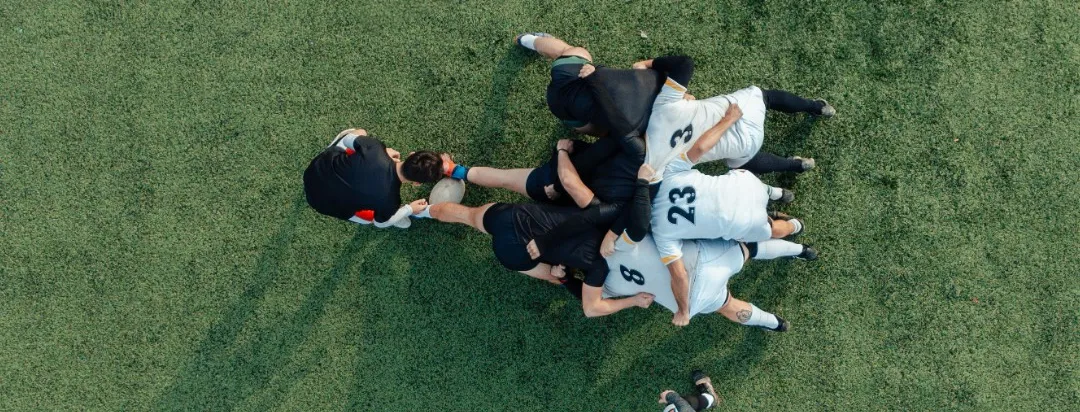
A ruck forms after a tackle when players from both teams bind over the ball on their feet, and hands are off limits. A maul forms when the ball-carrier stays up, bound by a teammate and an opponent. A scrum is the set restart contest for possession. Each phase has its own laws.
Few elements of rugby union capture the sport’s raw contest for possession like the ruck, maul and scrum. Each phase looks chaotic to the untrained eye, yet all three operate under a strict set of laws that shape every match.
This guide breaks down what actually happens in a ruck, maul and scrum, why the referee blows the whistle when he does, and how players and coaches turn these collisions into tactical platforms.
What Counts as a Ruck?
A ruck forms immediately after a ball-carrier is tackled to the ground and at least one player from each team binds over the ball while on their feet. Once the ruck is created, hands are off limits; the ball can only be moved with the feet until it emerges behind the hindmost player.
The moment a ruck is declared, a new offside line appears that runs through the hindmost foot of the last player from each side involved. Anyone standing in front of that line cannot interfere until the ball is out.
Key Ruck Laws to Know
Players must ‘enter through the gate’, meaning they join the ruck from behind the hindmost foot of their teammate. Coming in from the side is a penalty every time.
Hands may fish for the ball only if it is clearly un-rucked when the player arrives. The second the ruck is formed, touching the ball with the hands is illegal until it is out.
- No collapsing: intentionally going to ground on top of the ball is a penalty.
- No stamp or trample: feet must stay on the ground and cannot target a body.
What Makes a Maul Different?
A maul occurs when the ball-carrier stays on their feet and is bound by at least one teammate and one opponent. Think of it as a moving tug-of-war on two legs. Because the ball is off the ground, players can keep it in hand rather than having to roll it back with their feet.
As long as the maul continues forward, the referee allows play to proceed. If it stops moving and the ball does not emerge within a reasonable time, a scrum is awarded to the defending team.
Maul Laws and Strategy
Like a ruck, players must enter through the gate and stay bound. Collapsing the maul intentionally is illegal and comes with the added danger of tipping bodies awkwardly, so referees police it strictly.
Teams often use the maul as an attacking weapon from lineouts inside the 22-meter area. By keeping the ball at the back, the attacking side forces defenders to commit numbers, sometimes opening up space for a sudden release to backs.
Scrum Basics Explained
A scrum restarts play after minor infringements such as a forward pass or knock-on. It involves eight forwards from each side binding together in three rows before engaging head-to-head with the opposition.
The referee’s cadence, crouch, bind, set, ensures a stable and safe engagement. Once set, the scrum-half from the team with the put-in feeds the ball down the tunnel, and the hooker tries to rake it back with a foot toward the number eight.
How a Scrum Is Won
Contrary to popular belief, raw size is only part of the equation. Technique, synchronized timing and body angles determine which pack gains the upper hand. Front-row players drive forward and up, trying to shift the opposition off their mark, while locks and back-row forwards supply added weight and direction.
A clean heel back through the scrum opens a passing channel for the scrum-half, often giving the attacking team a stable launchpad for set-piece moves.
Ruck vs. Maul vs. Scrum: Key Differences
• Ground status: The ball is on the ground in a ruck, off the ground in a maul, and initially in the tunnel during a scrum.
• Numbers involved: Rucks and mauls can feature any number of players, whereas a formal scrum is always eight per side in union play.
• Restart vs. live contest: Scrums restart play; rucks and mauls are continuous phases that emerge during open play.
Common Penalties and How to Avoid Them
Most infringements stem from poor body position or impatience. Entering from the side at ruck time, collapsing a maul, early shoves in the scrum and popping up under pressure are the usual suspects.
Coaches drill players to keep hips below shoulders, bind legally and communicate constantly so that each phase stays within the laws and keeps momentum on their side.
- Maintain a straight spine through contact
- Time the shove to the referee’s ‘set’ call
Final Thoughts
While they look similar to a newcomer, the ruck, maul and scrum serve distinct purposes and follow their own sets of laws. Mastery of each contest can swing territory, possession and ultimately the scoreboard.
Whether you are watching from the stands or lacing up your boots, understanding how these phases work adds a new layer of appreciation for rugby’s controlled chaos.
Gametime Hero is the AI-powered operating system for active communities.
If you're organizing a community and tired of the chaos, start here

