Lorem ipsum dolor sit amet, consectetur adipiscing elit ut liqua purus sit amet luctus venenatis, lectus magna.

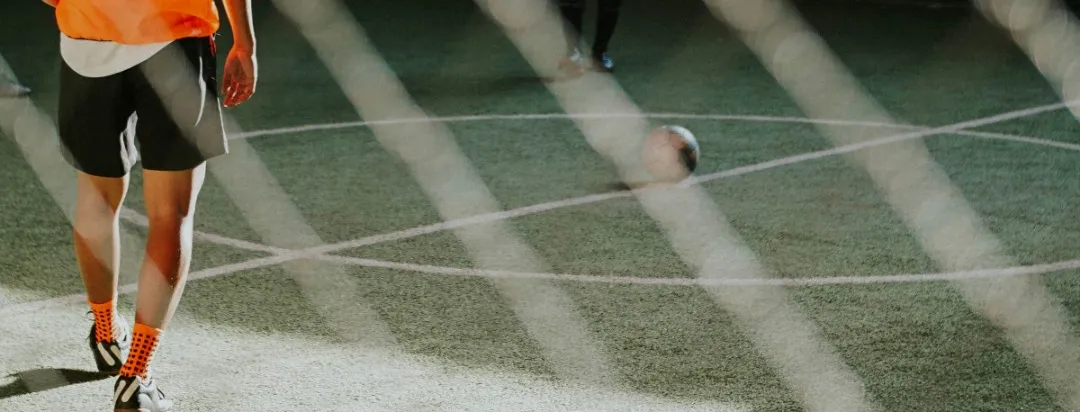
Show up at a park on a sunny afternoon and you will probably see a group of players dividing up shirts and skins, debating who gets first kick. That casual match is pickup soccer: fast, flexible, and fueled by mutual respect rather than an official rulebook.
While each game adjusts to space and talent, a handful of conventions keep things running smoothly. Understanding those unwritten rules ensures you can jump in without disrupting the flow. Here is what you need to know before you lace up and call next game.
Pickup soccer is an informal match organized on the spot, often with players who have never met before. There are no coaches, referees, or league schedules. Every aspect, from the size of the goals to the length of play, is decided by the group.
Because the setting is unstructured, consensus is king. Players discuss ground rules quickly, agree on boundaries, and settle disagreements with a simple replay or a friendly apology.
Games adapt to available space. On a full-sized pitch you might see 11-a-side, but most pickup games are smaller. Five-a-side and seven-a-side are common because fewer players mean more touches and less running for late arrivals.
Cones, backpacks, or water bottles usually mark goals and sidelines. If the ball rolls well past those informal lines, it is considered out and restarted with a kick or throw-in from where it crossed.
The first possession is decided by a quick coin flip, rock-paper-scissors, or simply whoever has the ball. A kickoff is taken from the center, but most groups skip ceremonial touches and play the ball forward immediately.
If the ball goes behind the goal without scoring, the defense usually restarts with a goal kick. Corner kicks are used only if both teams agree ahead of time, since many small fields have little space for wide corners.
Without referees, players self-police contact. Slide tackles are often banned to reduce injury risk, especially on hard turf or pavement. A simple shout of "foul" or "ball" ends the play, and possession is handed to the fouled side.
Serious infractions, dangerous kicks, pushing, or repeated hacking, can get a player asked to sit out. The goal is safety first and fairness a close second.
The first team to reach a predetermined total, often five goals, wins. Games can also be played to a time limit like 10 or 15 minutes. If neither side reaches the goal limit in time, the team ahead wins or the match ends in a friendly draw.
Goalkeepers rotate or volunteer. In smaller games the closest defender simply guards the net. Shots that hit the post, bag, or cone and bounce out are usually counted as goals if everyone saw the strike clearly.
At busy parks there may be more players than spots on the field. The standard system is winner stays on. The losing side steps off and the next team in line jumps on, keeping games brisk and competitive.
Players who tire out can call for a sub at any stoppage. This rolling substitution keeps intensity high without forcing anyone to overextend.
Pickup soccer thrives on shared respect and quick consensus, allowing anyone to enjoy the game without referees or rigid regulations.
Arrive with a ball, a positive attitude, and an understanding of these guidelines, and you will fit seamlessly into most pickup scenes, any park, any city, any day of the week.
Gametime Hero is the AI-powered operating system for active communities.
If you're organizing a community and tired of the chaos, start here
You know your community best — we know how to help it thrive.
You're already doing the hard part: building a community people care about. Gametime Hero gives you events, registration forms, a custom website, payments, scheduling, and communications — so you can stop juggling tools and start scaling.
Whether you run a weekly pickup group or a multi-season league, we'll walk you through exactly how it works for your setup.


Explore our collection of 200+ Premium Webflow Templates