
Are Professional Soccer Fields All the Same Size?
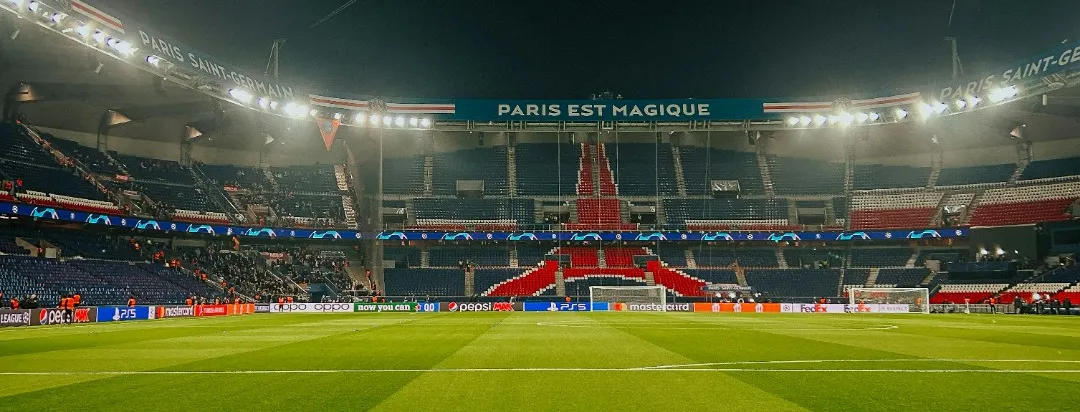
No, professional soccer fields vary. Domestic matches allow lengths of 100 to 130 yards and widths of 50 to 100 yards, while top international matches require 110 to 120 yards by 70 to 80 yards. Premier League pitches sit near 115 by 74 yards, and MLS fields often run about 120 by 75.
Watch enough top-flight soccer and every stadium begins to feel familiar: lush green grass, white boundary lines, and goals set 12 yards from the penalty spot. Because the playing surface appears standardized, it is easy to assume every professional field shares identical measurements.
The reality is more nuanced. While governing bodies impose strict minimum and maximum limits, clubs still enjoy surprising flexibility. That extra space, or lack of it, can influence everything from tactical philosophy to player recruitment. Let’s look at how the rules read on paper and how they play out in real stadiums.
FIFA’s Official Range for Field Dimensions
The Laws of the Game set by the International Football Association Board outline acceptable field sizes. For domestic competition, length (goal line to goal line) may be anywhere between 100 and 130 yards, with a width of 50 to 100 yards. Those numbers shrink for top-tier international matches: length must fall between 110 and 120 yards, and width between 70 and 80 yards.
Within those boundaries, every professional league is free to sanction pitches that best fit its clubs’ facilities, provided safety zones and technical areas also comply.
Why the Laws Allow Flexibility
Soccer predates purpose-built stadiums, so early grounds were carved out of open public land with limited opportunity for expansion. When the modern rulebook took shape, lawmakers chose tolerance rather than forcing clubs to bulldoze existing stands.
In urban centers, real estate remains scarce. Tight sites such as Craven Cottage or Anfield simply cannot stretch to the maximum width without major reconstruction, so latitude in the regulations keeps historic venues alive.
How Big Are Fields in Major Leagues?
Most Premier League pitches hover close to 115 by 74 yards, which fits neatly inside the international window. MLS facilities lean slightly longer, often around 120 by 75 yards, taking advantage of newer stadium footprints in North America.
La Liga’s dimensions vary more. Camp Nou measures roughly 115 by 74 yards, while the Estadio de Vallecas, home to Rayo Vallecano, is nearer the minimum width at 70 yards.
Tactical Impact of a Bigger or Smaller Pitch
A wide field rewards teams that rely on wing play, overlapping fullbacks, and quick switches of play. Opponents must cover extra ground, creating larger passing lanes and tiring defenders more rapidly.
Conversely, a narrow surface compresses the action. High-pressing sides can crowd the middle third, while direct teams can bypass midfield traffic with longer balls. Managers regularly cite pitch size when explaining why certain away fixtures feel more demanding than others.
Who Decides the Exact Measurements?
Club executives propose official dimensions before each season and submit them to their league for approval. Once registered, those numbers cannot change until the following campaign unless structural work forces an adjustment.
Coaching staffs often lobby for subtle tweaks, perhaps shaving a yard off the width to stifle an opponent built around wide play. Grounds crews then paint new boundary lines as long as they remain inside legal parameters.
Examples at the Extremes
Certain stadiums have become famous for sitting at either end of the size spectrum.
- Etihad Stadium (Manchester City): about 116 x 77 yards, among the broadest in England
- Stamford Bridge (Chelsea): roughly 112 x 73 yards, narrower than the league average
- Yankee Stadium (NYCFC, MLS): near the minimum width at 70 yards due to baseball field constraints
Bottom Line
Professional soccer fields are not cookie-cutter rectangles. They live within a defined range, yet clubs still possess room to tailor the playing environment to their traditions, tactics, and real-estate limits.
Next time a match feels faster, more open, or unusually congested, remember the chalked boundaries beneath the players’ boots might be shaping every pass and sprint.
Gametime Hero is the AI-powered operating system for active communities.
If you're organizing a community and tired of the chaos, start here


