Lorem ipsum dolor sit amet, consectetur adipiscing elit ut liqua purus sit amet luctus venenatis, lectus magna.

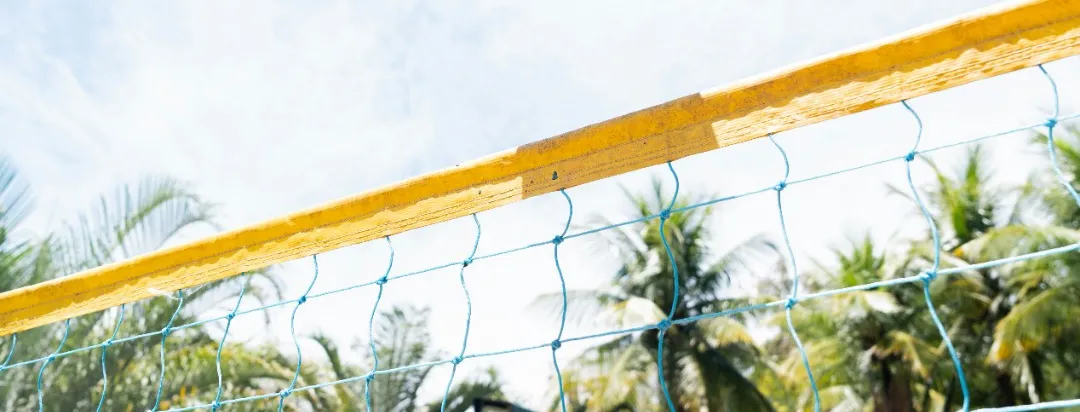
Watch any organized volleyball match and you will notice players circling the court after each side-out. Those movements, called rotations, are required by rule and form the backbone of every offensive system.
Once the whistle blows for serve, each athlete must be in the correct order or the referee will call an overlap fault. Mastering the why and when of rotations is essential for coaches, players, and even fans who want to follow the strategy on display.
Rotations ensure every player spends equal time in both the front row and the back row, balancing offensive opportunities and defensive duties throughout a set.
They also prevent a team from parking its best hitters at the net for the entire match, introducing a layer of strategy that rewards depth and versatility.
Each spot on the court is identified by a number that never changes, no matter which player occupies it. Understanding these positions is the first step to decoding rotations.
At the moment of serve contact, players must stand in numerical order, clockwise around the court. After the ball is served they are free to move anywhere within their assigned row.
A new rotation occurs every time the receiving team wins the rally. All six players shift one spot clockwise, bringing a new server to Position 1 and pushing a front-row attacker into the back row.
The referee checks two kinds of overlaps: those between adjacent players in the same row (left-to-right) and those between corresponding players in the front and back rows (front-to-back).
If any player drifts past an adjacent teammate before serve contact, an overlap violation is called and the point goes to the other team.
Most competitive teams run either a 6-2 or a 5-1 offense. The numbers describe how many setters and hitters are on the floor at any moment.
In a 6-2, two setters alternate. When one rotates to the front row, she becomes a hitter and the back-row setter runs the offense, giving the team three front-row attackers at all times.
A 5-1 keeps a single setter on the court for all six rotations. When that setter moves to the front row the offense has only two front-row hitters, but the benefit is continuous leadership and rhythm.
Because back-row players are often stronger passers, coaches design formations that pull front-row attackers out of the passing lanes without breaking overlap rules.
You will frequently see the middle blocker start near the sideline or the setter stack tight to the right antenna. Once the serve crosses the net, each player sprints to the planned offensive spot.
The libero, a defensive specialist who cannot attack above the net, can replace any back-row player without counting as a substitution. This means a team can keep its best passer on the floor through every rotation.
Regular substitutions also let coaches shield weaker rotations. For example, a serving specialist may replace a middle blocker in Position 1, allowing the starter to re-enter when the rotation brings her back to the front row.
Rotations may look like simple clockwise shuffles, yet they influence every serve receive pattern, substitution decision, and offensive option on the court.
By learning the six positions, the overlap requirements, and how different systems deploy setters and hitters, you can follow each rally with a clearer understanding of why players move where they do and when.
Gametime Hero is the AI-powered operating system for active communities.
If you're organizing a community and tired of the chaos, start here
You know your community best — we know how to help it thrive.
You're already doing the hard part: building a community people care about. Gametime Hero gives you events, registration forms, a custom website, payments, scheduling, and communications — so you can stop juggling tools and start scaling.
Whether you run a weekly pickup group or a multi-season league, we'll walk you through exactly how it works for your setup.


Explore our collection of 200+ Premium Webflow Templates