
How Do Penalties Work in Biathlon?
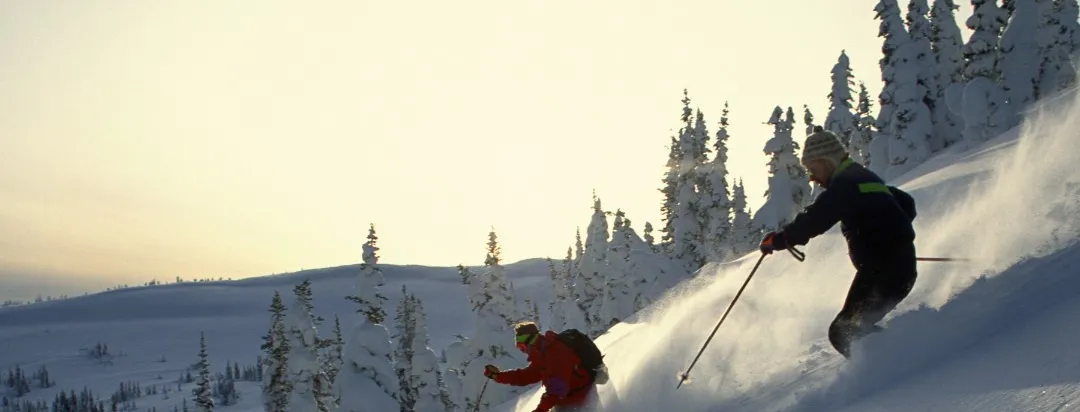
Ski fast, shoot straight, repeat. That simple slogan captures the essence of biathlon, but it also hints at the high stakes each time an athlete pulls the trigger. In this winter sport, every missed shot immediately converts into a measurable setback.
Penalties come in several forms, and the specific type depends on the race format. Whether you are watching your first World Cup broadcast or getting ready to try a local event, knowing how those penalties work will make every lap and target hit (or miss) far more meaningful.
A Quick Look at Biathlon Race Formats
Biathlon includes five primary race types at the international level: individual, sprint, pursuit, mass start, and relay. All combine cross-country skiing with two or four shooting bouts, alternating between prone and standing positions.
Because the skiing distance and shooting order shift from format to format, the International Biathlon Union (IBU) assigns different penalty systems to keep overall race times comparable and tactically interesting.
What Constitutes a Penalty?
A biathlete earns a penalty each time a bullet fails to knock down a target. Every miss counts individually, so five targets can result in as many as five penalties during one shooting stage.
False starts, lane violations, or loading errors can also trigger penalties, but target misses are by far the most common and influential.
The Penalty Loop: Sprint, Pursuit, Mass Start
In sprint, pursuit, and mass start races, athletes must ski a 150-meter penalty loop for every missed target. The loop sits adjacent to the range, so viewers see an immediate visual cost when someone misses.
A well-conditioned skier covers the loop in roughly 22 to 25 seconds depending on snow conditions. That may not sound like much, but stacking two or three loops after one stage can drop an athlete dozens of positions.
- 150-meter distance per miss
- Average time loss: 20–25 seconds
- Skied immediately after each shooting bout
Time Additions: The Classic Individual Race
The individual race, the oldest format in biathlon, uses a one-minute time penalty instead of loops. Racers ski a fixed course without interruption, and the timing system adds 60 seconds for each miss when they cross the finish line.
Because skiing speed cannot erase a full minute as easily as a 150-meter loop, accuracy tends to outweigh raw speed in this format. A perfect shooting score often decides the podium.
Relay and Mixed Relay Adjustments
Relay events offer each athlete three spare rounds in addition to the five already loaded. If targets remain standing after eight total shots, the athlete must ski the penalty loop for each miss still on the rack.
This hybrid system rewards teams that reload quickly and stay composed under pressure while still punishing poor accuracy with extra distance.
How Penalties Shape Strategy
Biathletes constantly weigh the trade-off between shooting speed and accuracy. A risky five-second faster shooting bout can backfire if it produces even one miss and a 25-second loop.
Course profile also matters. Athletes may push harder on climbs if they believe they can handle a potential loop on flatter terrain, whereas on individual-race days they often prioritize steady breathing to protect their aim.
Final Thoughts
Penalties in biathlon are straightforward on paper but pivotal in practice. Loops in the faster formats and large time additions in the individual race ensure that marksmanship and composure remain just as vital as skiing speed.
Next time you tune in, keep an eye on the range. Each clang of a missed target can rewrite the leaderboard in real time, and understanding the penalty system lets you appreciate exactly how much ground an athlete must cover to make up for that single slip.
Gametime Hero is the AI-powered operating system for active communities.
If you're organizing a community and tired of the chaos, start here

